
Compare Whistler real estate with Squamish options. See lifestyle tradeoffs, pricing, commute, rental rules, and local feel so you buy where life makes sense.
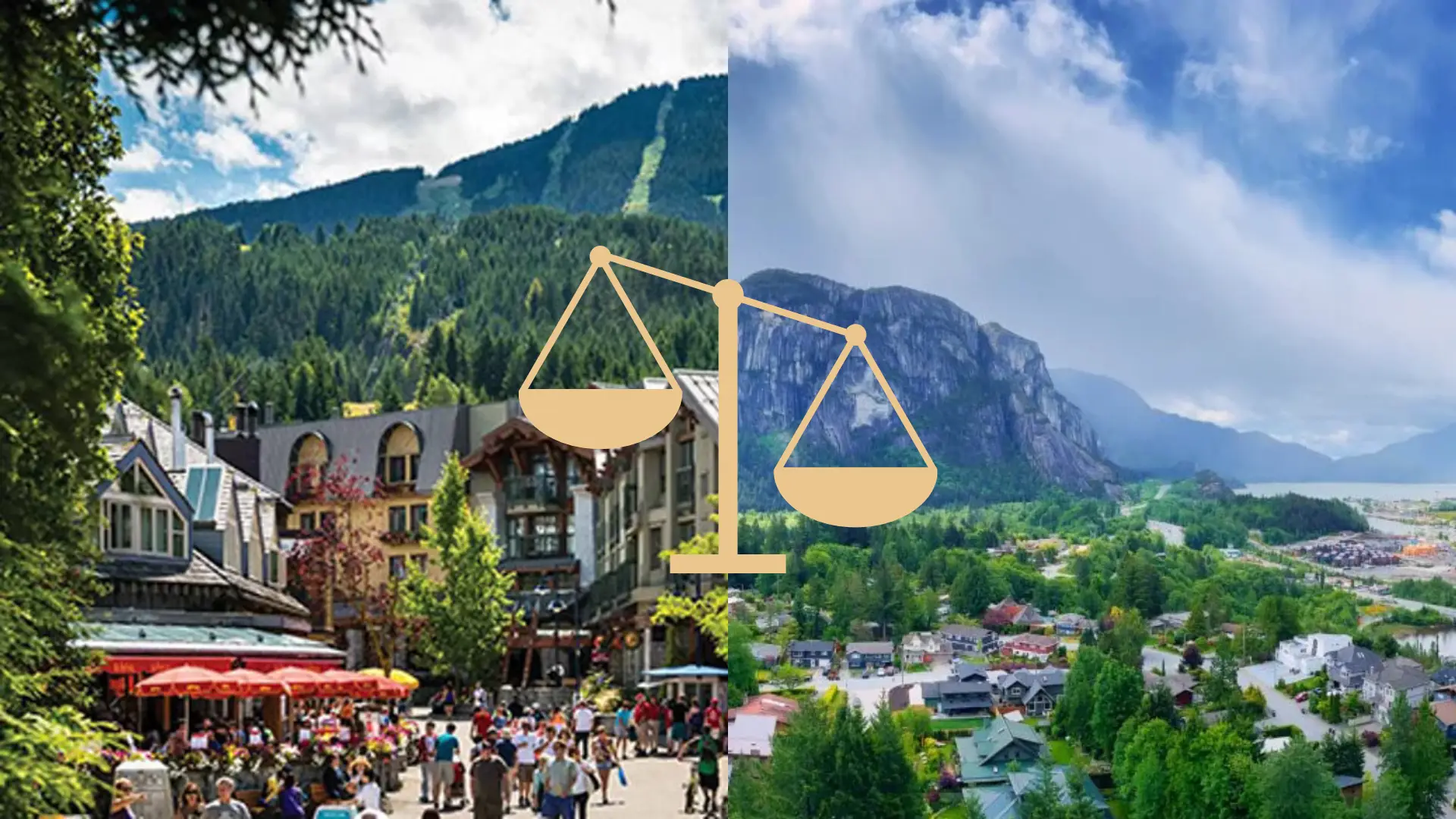
Whistler and Squamish sit about 60 kilometres apart on the Sea-to-Sky Highway. Both have mountains, trails, and strong real estate markets. But buying in one versus the other can mean a completely different life. The choice isn’t just about square footage or price per square foot when looking at Whistler real estate and Squamish properties. It’s about how you want to spend your days, how often you’ll be there, and what you actually need from a property. This guide breaks down both markets so you can figure out which one fits.
Table of Contents
Whistler Real Estate vs Squamish: The Lifestyle Question
Whistler is a purpose-built resort municipality. It draws roughly 3 million visitors a year, and that shapes everything from property prices to daily atmosphere. Squamish is a growing residential town with serious outdoor credentials. It has mountain biking, climbing, kitesurfing, and quick access to Vancouver. Neither market is objectively better. The right one depends entirely on how you plan to use the property.
Who Typically Chooses Whistler?
When considering Whistler real estate, the area tends to attract buyers who want ski-in/ski-out access, a resort base for family trips, or a property that generates rental income when they’re not there. The village has fine dining, boutique shops, spas, and year-round events. Whistler Blackcomb covers 8,171 acres and was ranked the top ski resort in North America in 2026. For buyers who want a second home with strong lifestyle appeal and global name recognition, Whistler real estate is hard to beat.
International investors are also drawn here. Whistler remains exempt from Canada’s foreign buyer ban, which keeps international demand steady and supports long-term values.
Who Typically Chooses Squamish?
Squamish suits buyers who want to live there full-time, commute to Vancouver a few days a week, and have world-class trails within minutes of home. It’s a younger, fast-growing community with a median age of around 37 and a strong sense of local identity. Climbing alone brought $25.4 million into the community in 2025. Mountain biking generated $60 million in visitor and resident spending. This is an outdoor town with real infrastructure, not just a weekend destination.
First-time buyers also find Squamish more accessible than Vancouver, with entry-level condos and townhomes that don’t require sacrificing lifestyle.
Daily Living: Resort Energy or Mountain-Town Practicality?
Life in Whistler
Living in Whistler means the gondola is close, the village is walkable, and there’s always something happening. Winters bring skiing and snowboarding. Summers bring mountain biking, hiking, and events at Whistler Olympic Plaza. The Audain Art Museum, Scandinave Spa, and a strong restaurant scene round out the amenities.
But peak seasons bring crowds. Grocery runs can take longer. Parking fills up. If you’re a full-time resident exploring Whistler real estate, you’ll likely gravitate toward quieter areas like Alpine Meadows or Rainbow, away from the tourist core. These residential pockets offer a more grounded daily routine while still being close to everything Whistler offers.
Life in Squamish
Squamish has a walkable downtown with cafes, restaurants, a brewery scene, and regular farmers’ markets. Schools are good, services are expanding, and the community has a genuine local feel. You can hit trails after work, be in Vancouver for dinner, and still make it back before dark.
Neighbourhoods like Garibaldi Highlands offer large lots and mature trees with easy trail access. Brackendale is quieter and family-oriented. Downtown suits buyers who want walkability and urban convenience in a mountain setting. The pace is different from Whistler. Less resort, more real town.
Property Types and Ownership Goals
Vacation Homes and Weekend Retreats
For many, investing in Whistler real estate is the natural fit for vacation-use buyers. But zoning matters a lot here. Phase 1 properties allow nightly rentals with flexible owner use. Phase 2 properties cap personal use at 28 days in winter and 28 in summer, with the unit in a managed rental pool the rest of the time. Residential-zoned properties cannot be used for short-term rentals at all. Understanding this before you buy is not optional.
Squamish also works as a vacation base, particularly for buyers who want weekend access to climbing, biking, and Howe Sound without paying Whistler prices.
Full-Time Residences
Squamish is the stronger choice for most full-time buyers. Schools, healthcare, services, and commute viability all support year-round living. That said, Whistler real estate includes genuine residential communities. Buyers who work remotely or whose lives genuinely centre around the resort can make full-time Whistler living work well.
Investment and Rental Considerations
Both markets have rental potential, but the mechanics differ. When evaluating Whistler real estate, it is important to note that the rental market is driven by tourism and governed by strict zoning rules. Squamish has a tight long-term rental market with vacancy rates well under 1%, which supports consistent income for long-term rental investors. Short-term rental demand in Squamish is growing alongside tourism, which hit $408 million in 2024. Get local advice before assuming either market works the way you expect.
Budget, Value, and Long-Term Priorities
As expected, Whistler real estate commands resort-market pricing. Benchmark prices as of May 2026 sit at around $2.7 million for detached homes and $603,600 for condos. Squamish single-family homes have a median assessed value of approximately $1.5 million, with strata homes around $850,000. And while the broader BC market softened in 2026, Squamish saw a 2% increase in assessed values while Whistler held flat. Both markets outperformed Metro Vancouver.
When Paying More May Make Sense
If your goal is a ski-season family base with rental income covering carrying costs, Whistler’s premium can be justified. A ski-in/ski-out unit near the village generates strong occupancy because the demand is consistent and global. The lifestyle access is immediate. For buyers who will use the property regularly and value resort convenience, the higher entry price reflects real utility.
When Practical Value May Matter More
A professional who works partly in Vancouver but wants trails after work gets more from Squamish. More space, lower price, a community with schools and services, and a commute that’s actually manageable. The outdoor access is different from Whistler but no less impressive. And the long-term residential quality is strong.
Access, Commute, and Regional Connections
For Vancouver Commuters
Squamish is about 55 minutes to downtown Vancouver on a good day. Whistler adds another 45 minutes to that. As one local source puts it, “if you commute to Vancouver even a couple of days a week, Squamish is the answer.” Investing in Whistler real estate works better for remote workers, seasonal residents, or buyers whose lives don’t require regular city trips.
For Frequent Travellers and International Buyers
Vancouver International Airport is about 80 kilometres from Squamish and roughly 120 kilometres from Whistler. For international buyers, both markets are accessible, but Whistler’s exemption from the foreign buyer ban makes it a more straightforward purchase. Whistler Spaces supports out-of-province and international buyers with virtual showings, remote negotiations, and connections to trusted property management services.
Community Feel and Neighbourhood Fit
Whistler’s resort neighbourhoods are built around ski access and guest experience. Squamish’s neighbourhoods are built around families, commuters, and outdoor enthusiasts. Both have strong community ties, but the energy is different. Visit both at different times of year if you can. A Whistler February and a Squamish October feel completely different from each other, and from a quiet Tuesday in March.
Questions to Ask Yourself Before Choosing
Before you start viewing properties, work through these:
- Will this be a primary home or a vacation property?
- How often will you actually use it?
- Do you need rental income to offset costs?
- How important is commuting to Vancouver?
- Do you prefer resort energy or a local residential routine?
- What amenities do you need within easy reach?
- How long do you plan to hold the property?
Your answers will point clearly toward one market or the other.
How Whistler Spaces Helps Buyers Compare Both Markets
Andrew King has spent over 20 years working across the Sea-to-Sky corridor with more than $1.5 billion in transactions. Whistler Spaces covers Whistler, Squamish, and Pemberton, working with local buyers, vacation-property seekers, investors, and international clients. Whether you’re comparing a Phase 1 condo in Creekside with a townhouse in Garibaldi Highlands, or trying to figure out which market makes sense for your goals, the team can help